“I’ve realized sometimes the hardest part of growing older is realizing that love and access are two very different things.”
There comes a point in a woman’s life when she realizes she’s not tired because she’s getting older.
She’s tired because she’s been carrying things that were never entirely hers to carry.
The relationships. The responsibilities. The expectations. The apologies she never received. The conversations she rehearses in her head but never actually has.
The people she keeps showing up for, even when showing up for them means disappearing a little more herself.
And perhaps the most uncomfortable realization of all?
Some of the people she loves most have become so accustomed to her strength that they’ve forgotten she is a person who needs taking care of, too.
Not because they’re terrible people.
Not because they don’t love her.
But because somewhere along the way, she made being everything to everyone look effortless.
And everyone believed her.
The Woman Who Always Figures It Out
Every family has one.
Every circle of friends has one.
She’s the woman who remembers the birthdays, makes the appointments, checks on the people who have gone quiet, organizes the holidays, notices when something is wrong, and somehow knows what everyone needs before they ask.
She’s the emergency contact.
The problem solver.
The person who can be counted on.
And for years, she wears those titles proudly.
Because there is something beautiful about being dependable. About loving people enough to make their lives a little easier.
Until one day, she realizes something.
Everyone knows what to do when they need her. But very few know what to do when she needs them.
And that realization doesn’t arrive with some dramatic confrontation.
It usually comes quietly.
Maybe while she’s sitting in her car after another exhausting day.
Maybe while she’s washing dishes after everyone else has gone to bed.
Or maybe it’s the moment she finally says, “I can’t do that right now,” and discovers just how uncomfortable people become when the woman who always says yes suddenly says no.
That’s when something shifts.
Not necessarily the love.
But the understanding of what that love has been costing her.
When Being Needed Becomes Being Taken for Granted
Here’s something I’ve been thinking about lately.
We talk so much about being loved.
But we don’t talk nearly enough about being considered.
There is a difference.
Someone can love you and still assume your time is available.
Someone can love you and still expect you to absorb their problems.
Someone can love you and never think to ask whether you have anything left to give.
And perhaps that’s what makes these relationships so complicated.
Because the love is real.
The history is real.
The good memories are real.
But so is the exhaustion.
Two things can be true at the same time. You can love someone deeply and feel completely depleted by the relationship.
And admitting that doesn’t make you unkind.
It makes you honest.
The Things We Don’t Say Out Loud
I wonder how many women are quietly carrying resentment they don’t even want to admit exists.
Not because they don’t love their families.
Not because they regret the sacrifices they’ve made.
But because somewhere inside them is a question they feel guilty even asking.
When is it my turn?
When is it my turn to be the one who doesn’t have to figure everything out?
When is it my turn to be tired without explaining why?
When is it my turn to make a decision based on what I need rather than how it will affect everyone else?
And maybe the hardest question of all:
If I stopped doing everything I do for everyone, would they still know how to love me?
That’s a difficult question.
Because sometimes we become so attached to being useful that we forget we’re worthy of love when we’re doing absolutely nothing for anyone.
We confuse being needed with being valued.
We confuse keeping everyone happy with having a happy life.
And we confuse our ability to endure something with our obligation to continue enduring it.
Those are not the same things.
The Guilt of Choosing Yourself
Women are remarkably good at feeling guilty.
We feel guilty when we work too much.
When we don’t work enough.
When we say yes.
When we say no.
When we need help.
When we finally stop offering it.
And heaven forbid we decide to spend an afternoon doing something simply because it makes us happy.
Somewhere, someone might need something.
But here’s what I wish more women understood.
You are allowed to disappoint someone without having done anything wrong.
Read that again.
You are allowed to disappoint someone without having done anything wrong.
Not every request is your responsibility.
Not every problem requires your solution.
Not every uncomfortable silence needs you to fill it.
And not every person who is upset with you has been mistreated by you.
Sometimes they’re simply experiencing a version of you who is no longer willing to abandon herself to keep everyone else comfortable.
That doesn’t make you selfish.
It makes you someone who has finally begun including herself in the list of people she cares about.
Love Shouldn’t Require You to Disappear
I don’t believe the answer is to start cutting people out of our lives every time they disappoint us.
Relationships are complicated.
Families are complicated.
People are complicated.
And goodness knows, we’re all capable of being the person who needs more than we give sometimes.
There are seasons when someone we love genuinely needs us to carry more.
Illness.
Grief.
Financial hardship.
Heartbreak.
Life doesn’t always distribute responsibility evenly.
And love, real love, sometimes means showing up when it’s inconvenient.
But there’s a difference between helping someone through a difficult season and becoming permanently responsible for making their life work.
There’s a difference between generosity and obligation.
Between compassion and self-neglect.
Between being there for someone and being expected to be available for everything.
Love should make room for both people to exist.
Not just the one who needs.
But the one who gives.
What Happens When You Stop?
Here’s the part nobody really prepares you for.
When you begin changing the way you show up in relationships, some people won’t celebrate your growth.
They’ll question it.
They might call you distant.
Different.
Selfish.
They might remind you of who you used to be.
And maybe they’re right about one thing.
You are different.
You no longer answer every phone call simply because it rings.
You no longer feel compelled to explain every decision.
You no longer confuse someone’s disappointment with your failure.
You begin allowing people to solve problems you know perfectly well you could solve for them.
And you discover that the world doesn’t fall apart when you stop holding every piece of it together.
Some relationships adjust.
Some become stronger.
Some people surprise you by stepping up when you finally give them the opportunity.
And others reveal how much of the relationship depended on your willingness to do all the work.
That discovery can hurt.
But it can also be incredibly freeing.
Maybe This Is What Getting Older Teaches Us
I used to think growing older meant becoming more certain about everything.
More confident.
More accomplished.
More capable of handling whatever life throws our way.
And in some ways, it does.
But I’m beginning to think one of the greatest gifts of getting older is something much quieter.
It’s realizing we don’t have to prove our love through exhaustion.
We don’t have to earn our place in someone’s life by making ourselves indispensable.
We don’t have to be the strongest person in every room.
And we certainly don’t have to keep saying yes to a life that leaves us with nothing left for ourselves.
Maybe maturity isn’t about learning how to carry more.
Maybe it’s finally having the wisdom to recognize what was never ours to carry in the first place.
There’s a certain sadness in that realization.
Because it means acknowledging how much of ourselves we’ve given away without even noticing.
But there’s also something beautiful about it.
Because it means there’s still time.
Time to change the conversation.
Time to ask for help.
Time to stop apologizing for having needs.
Time to build relationships where love isn’t measured by how much one person is willing to sacrifice.
And time to remember the woman underneath all those responsibilities.
The woman who has dreams that don’t involve solving someone else’s problems.
The woman who wants to laugh until her stomach hurts.
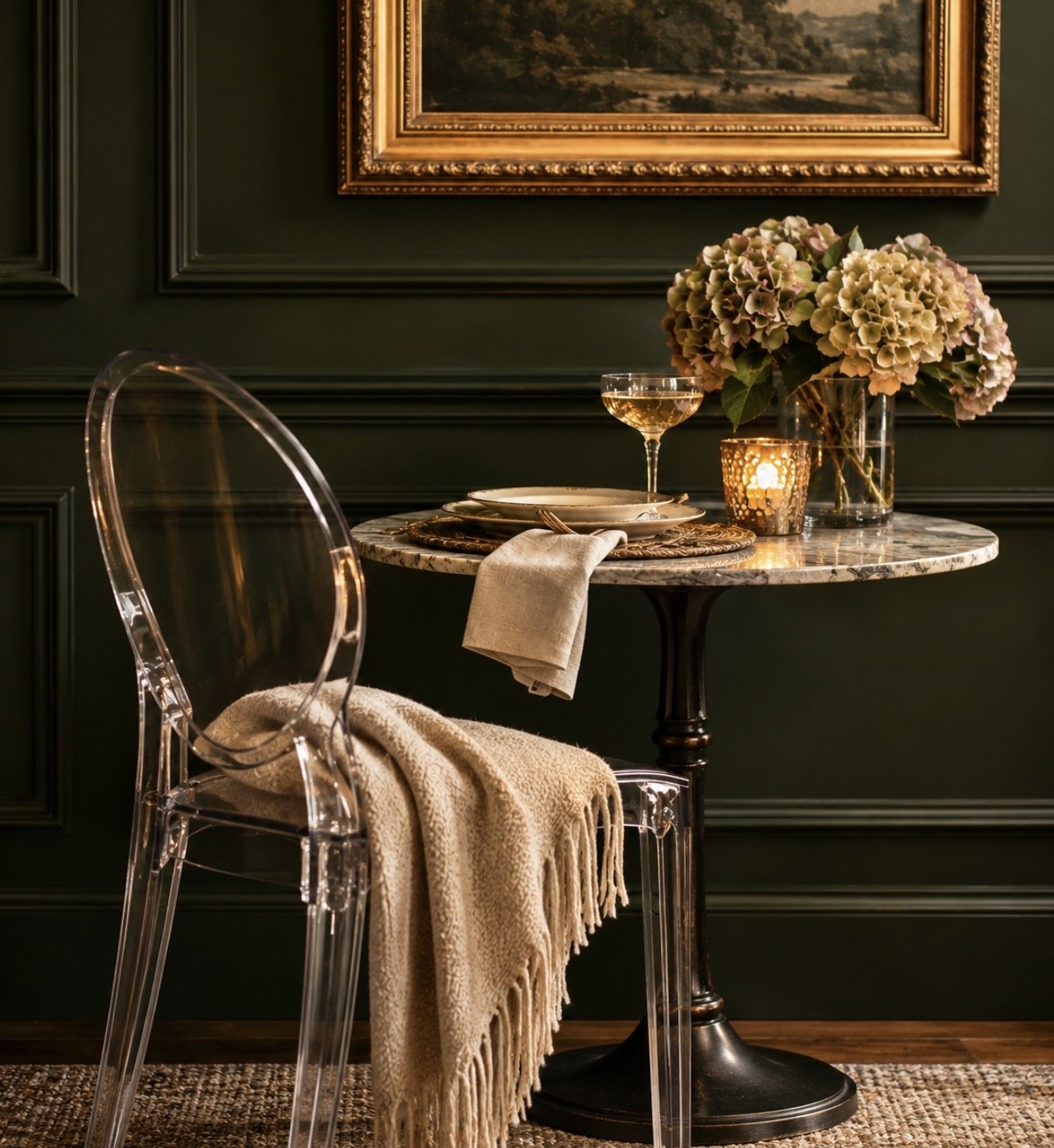
Who wants to sit at a beautiful table with people who genuinely enjoy her company.
Who wants to take the trip, order dessert, sleep late, read the book, and occasionally let the phone ring.
Not because she’s stopped loving people.
But because she’s finally remembered that she is one of them.
A Seat at Your Own Table
If there’s one thing I hope we learn as women, it’s that we don’t have to wait until we’re completely exhausted to begin taking care of ourselves.
We don’t have to reach a breaking point.
We don’t have to become angry or bitter.
And we don’t have to stop loving the people who have relied on us for years.
We can simply begin doing something different.
We can love people without managing their entire lives.
We can be generous without giving away our peace.
We can show up without showing up for absolutely everything.
And perhaps most importantly, we can begin paying attention to the relationships where we feel loved for who we are, not simply appreciated for what we provide.
Because one day, when the children are grown, the responsibilities change, the house gets quieter, and life looks a little different than it once did, I hope we haven’t spent so many years taking care of everyone else that we’ve forgotten how to take care of ourselves.
I hope there’s still a woman there who knows what makes her happy.
Who remembers what she wanted before everyone else needed something.
Who understands that her worth was never determined by how much she could carry.
And who finally realizes that she doesn’t have to exhaust herself to deserve a place at the table.
You can love people with your whole heart and still decide they don’t get every piece of you.
And maybe that’s not selfishness.
Maybe that’s wisdom.
Maybe that’s peace.
Maybe that’s what it looks like when a woman finally understands that she deserves the same kindness, consideration, and love she’s spent a lifetime giving everyone else.
And perhaps, after all these years of making sure everyone else has a seat at the table, it’s time to pull out a chair for ourselves.
Because we belong there, too.
The Check Is on Me
Here’s something to think about over dinner tonight.
When was the last time someone asked how you were doing, and stayed long enough to hear the real answer?
And perhaps an even more important question:
When was the last time you gave yourself permission to answer honestly?
Until next time, save a seat for yourself.